internet human co.
Companies are built on people.
Here's what every AI company is doing right now: making agents for doing tasks. And while that is useful, we think it will never replace people.
We have a different thesis. Businesses are not built on tasks, they are built on people.
Think about what a remote employee actually is when you strip everything away: a name, a phone number, an email, and a laptop. That is it. The reason they are valuable is not the tools they use, it is because they show up, they remember things, they build relationships, and they get better the longer they work for you.
So we are building that, but natively on the internet: digital employees with their own name, their own number, their own email, their own virtual machines, doing real work and holding real relationships with colleagues and clients.
We call them Internet Humans, and White Gloves is our first one.
The D2C WhatsApp problem.
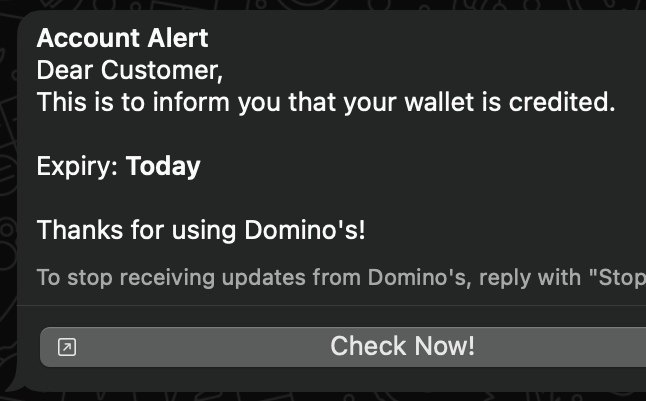
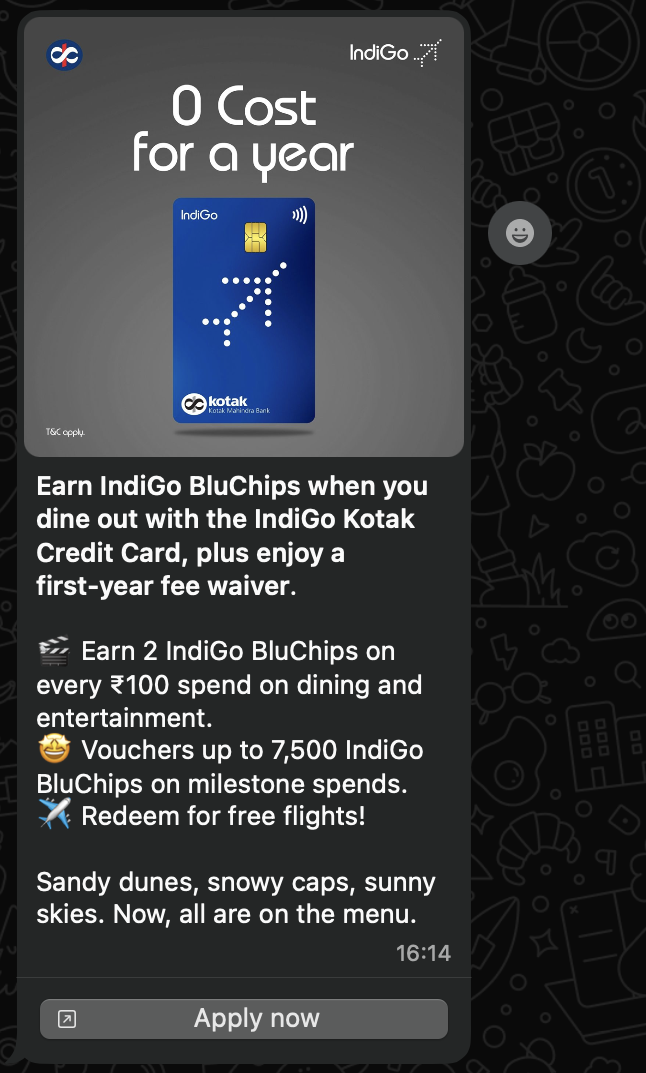
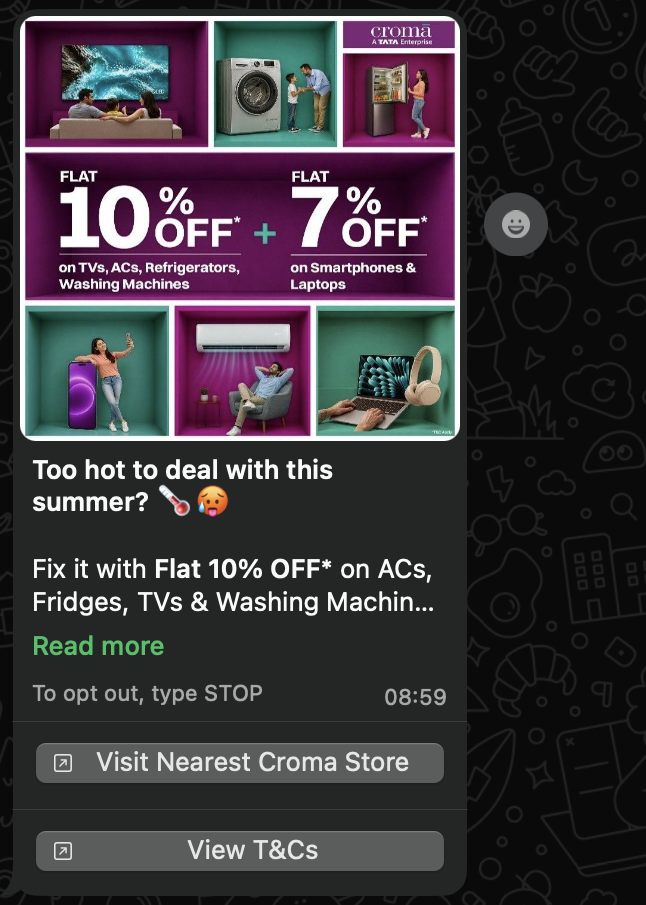
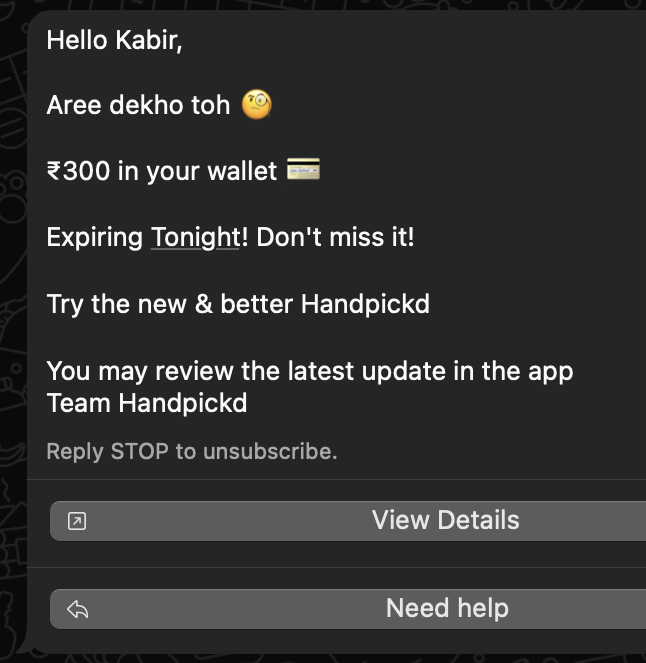

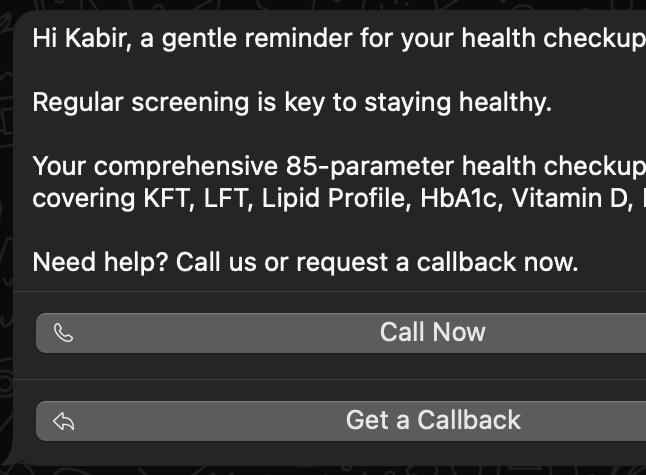
People spend the most time on WhatsApp, yet reply rates to brands on WhatsApp broadcast messages are just around 5%. The problem being, brands using a personal and conversational platform to broadcast a generic message to 10,000 people, like traditional ad systems.
White Gloves is our answer to this.
An Internet Human who works for your brand and knows every single customer personally: what they last ordered, what they complained about, what they love, when their birthday is, when they need a nudge and when to leave them alone.
It is always there, handling support, driving reorders, recovering abandoned carts, reducing RTOs, and building the kind of relationship that makes customers come back without being pushed.
Where the bet is today.
We onboarded our first design partner: Roobaroo.ai, an edtech company with 3,000 warm leads going into their summer bootcamp.
I've sat with their founder for hours to understand what they need, and it pushed us to build a CRM on top of their conversations so their team can see every lead's stage and jump in when needed.
The product is finally at a point where the major bugs are handled, and we are on track to onboard 5 brands in the next 4 weeks.
The first 5, the next 50, the next 6 months.
Our next 5 brands are from my own network: founders in Wolfpack Labs and Goatlife.
The 50 after that come from the Masters' Union network and our penetration in active D2C communities. The plan is to stay focused on the low-hanging clients we know are ready to experiment.
In 6 months we project ₹15L MRR as the floor and ₹20L MRR as the base case, charging around ₹10,000 per brand for one Internet Human.
Why we win, and keep winning.
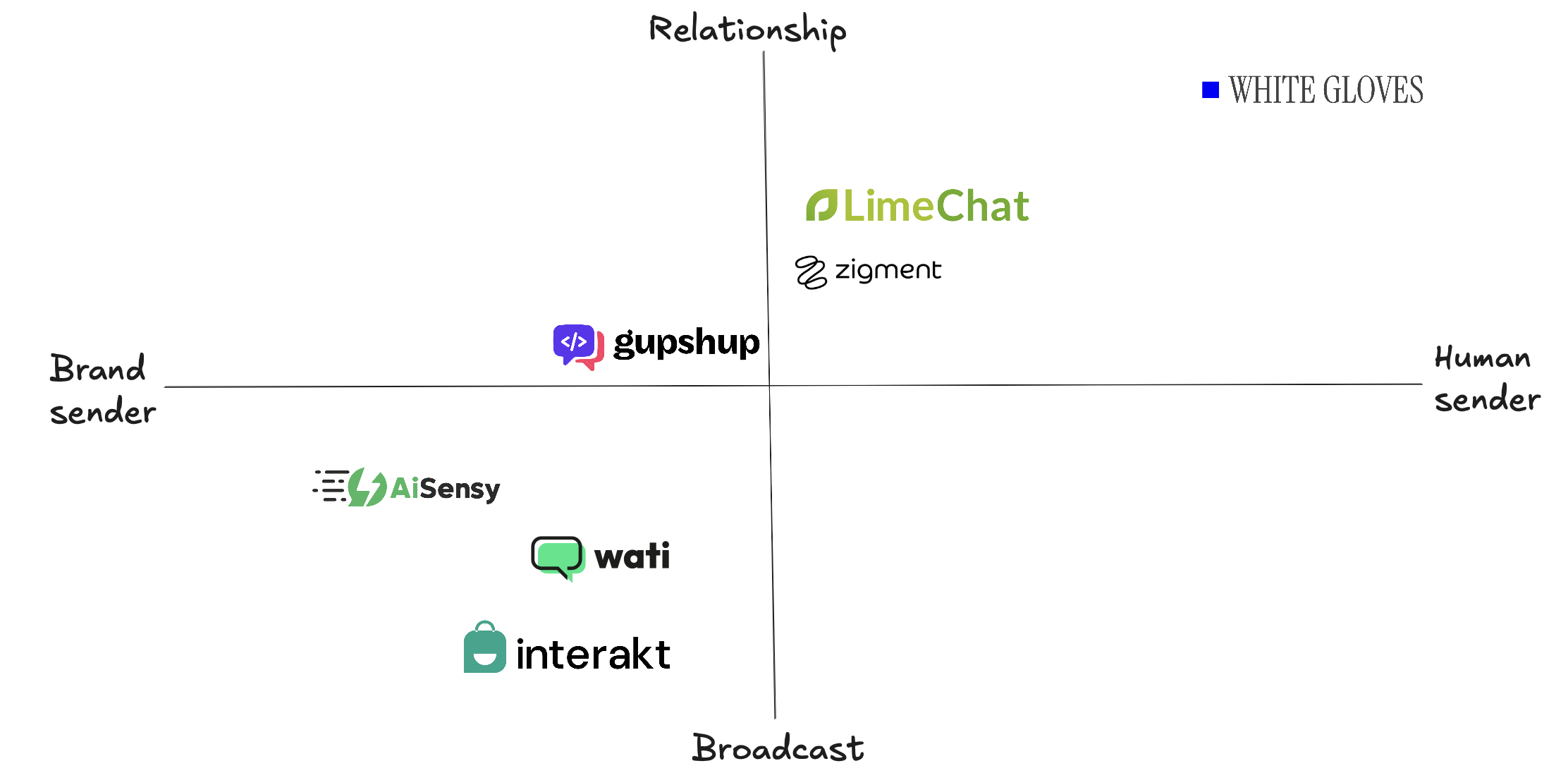
Every player in the market right now will move towards more personalised broadcast, but never towards relationships. That is our right to win, and we know how to fortify it.
For them to actually come to the relationship angle, they would have to completely change their thesis: from sending messages as a brand to sending them as a human.
The bigger vision.
The future of IHC is simple: to keep building Internet Humans for other contexts. Concierges for premium services, sales reps that live on email, LinkedIn influencers for companies.
But the bigger goal is to run our business on numbers and without dependence on the big model providers.
To mitigate that, we have taken two conscious decisions.
First, over the past 3 months we have refined the IH core so much that for our use case, Opus 4.7 and Gemini 3.1 Pro are not that far off from cheaper open source models like Kimi K2.6 and Qwen 3.6.
Second, we are training our own small 1 to 5B parameter model, capable of running locally, so that we can institutionalise the product with safety and cost firmly in our hands.
How I got here.
I started coding at 11. By 13 I had built a robot and taken it to Germany. At 15 I was making Android apps, at 16 I was running a small design agency, and at 17 I joined a hardware startup.
In college I built theGoodBrowser, an agentic browser, before OpenAI and Perplexity had built theirs.
In 2023 I also started selling perfumes. The brand did ₹7L in revenue in the first 3 weeks, and sits at around ₹65L in total revenue today.
Why Ankit, specifically.
You have spent 20 years sitting at the intersection of B2B SaaS and sales: SurveyMonkey, DropThought, and now helping founders go from 0 to 1 and 1 to 10M ARR as a fractional CRO.
I can build the product, and I know enough sales to land the first few brands. But B2B sales at any kind of scale is a different ball game, and sales direction is where we need your help.
Where ₹17.5L takes us.
We have secured ₹12.5L in grants from Masters' Union, ₹5L of which is already used. We are coming to you for ₹10L on top of that.
It gives us the room to grow beyond our first 5 clients and cover the tech costs of running them. We are hiring in just two departments for now: development and sales.
Kabir
[end of letter]